
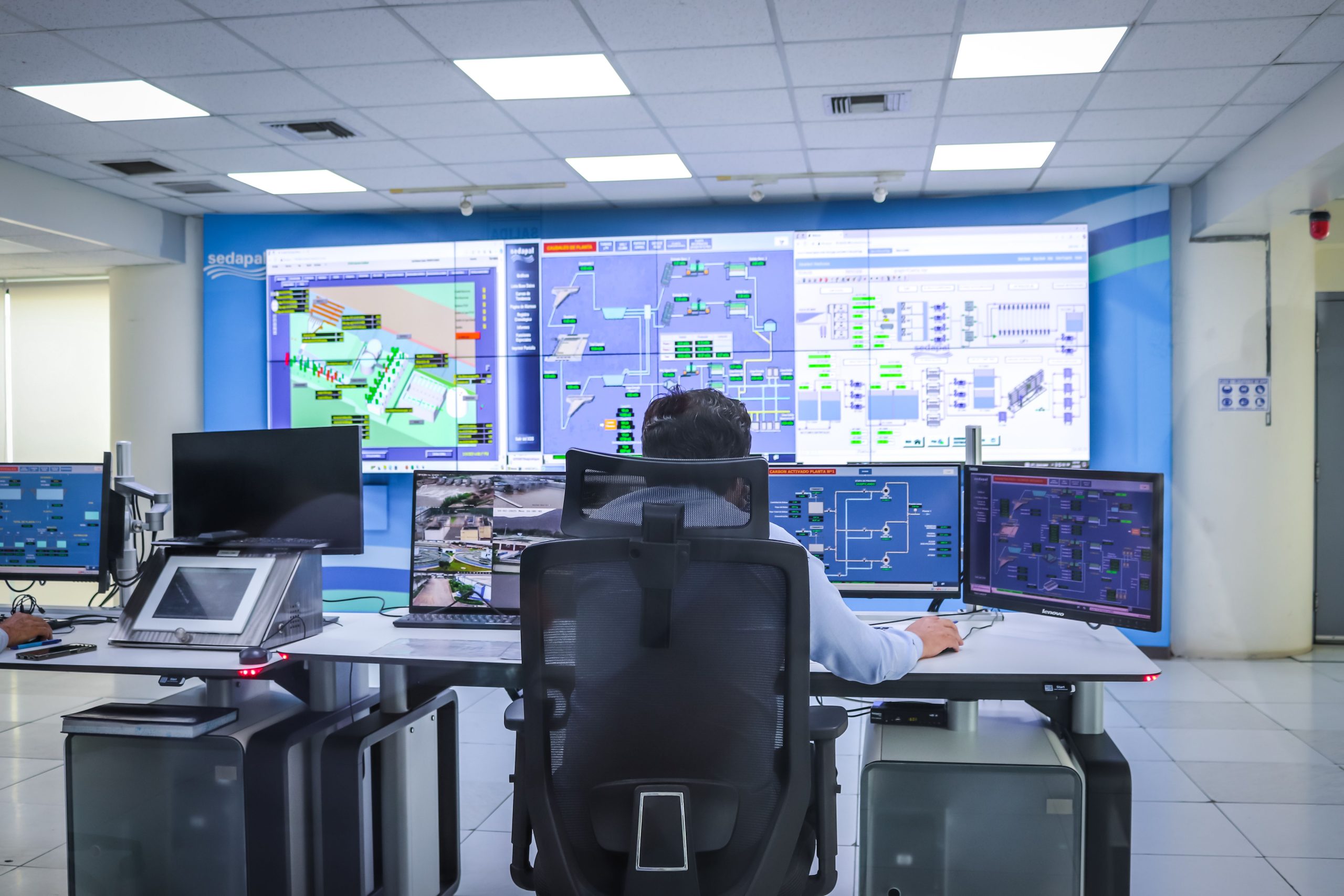
The most useful AI on the power grid may never make a decision on its own. It may instead give an operator a better estimate of tomorrow’s peak, flag a storm-hit feeder sooner, or help dispatch a repair crew to the right place.
That distinction matters. The grid is a physical system that must keep supply and demand in balance continuously; AI can sharpen forecasts and surface patterns, but it does not create electricity or make weak infrastructure resilient by itself. The practical shift is from reacting to incomplete information toward acting on better, earlier information.
Forecasting: a better estimate before the peak arrives
Utilities have long forecast electricity demand. Machine-learning models add the ability to combine many signals, including historical use, weather, calendar effects and local conditions, and to update predictions as those signals change. Forecasts can be useful at several horizons: days ahead for planning available generation, hours ahead for operations, and minutes ahead for responding to rapid changes.
That matters more as power comes from a wider mix of sources. Wind and solar output move with weather, while electric vehicles, heat pumps and large new facilities can change where and when demand appears. In a 2024 presentation to FERC, PJM described testing XGBoost, neural networks, LSTMs and transformers for load forecasts. Its presentation said XGBoost was faster and slightly more accurate than the other tested approaches in its analysis. That is a valuable operational result, but not proof that one model will win everywhere: a model’s performance depends on the region, forecast horizon and data it receives.
A forecast also needs to communicate uncertainty. A single predicted peak can conceal the risk that demand will be substantially higher or lower. Better tools should help operators see a range of plausible outcomes and decide how much reserve or flexibility to keep available. The U.S. Department of Energy’s 2024 report on AI opportunities for the energy system emphasizes that trustworthy grid models need validation, interpretability and human oversight, not just promising accuracy scores.
Load balancing is coordination, not a magic switch
“Load balancing” can sound as if an AI model simply redistributes electricity around the country. In practice, it can mean improving forecasts and helping operators coordinate generation, storage and flexible demand within the real limits of wires, transformers and power plants.
For example, a utility or grid operator might use a demand forecast to decide when to charge or discharge storage, adjust a flexible load, or procure additional supply. At the distribution edge, smart meters and other sensors can reveal where demand is rising or where a local transformer may be approaching its limits. But meter data is not automatically a live control signal: how often readings arrive, how reliable they are and what the utility is permitted to do with them all matter.
I think this is where AI’s value is easiest to overstate. A more accurate forecast can help a utility use existing assets more effectively, but it cannot remove a physical bottleneck or substitute for investment where equipment is overloaded. The best outcome may be avoiding unnecessary emergency measures or targeting upgrades more carefully, not eliminating the need for grid construction.
Outage detection: notice, locate, then restore
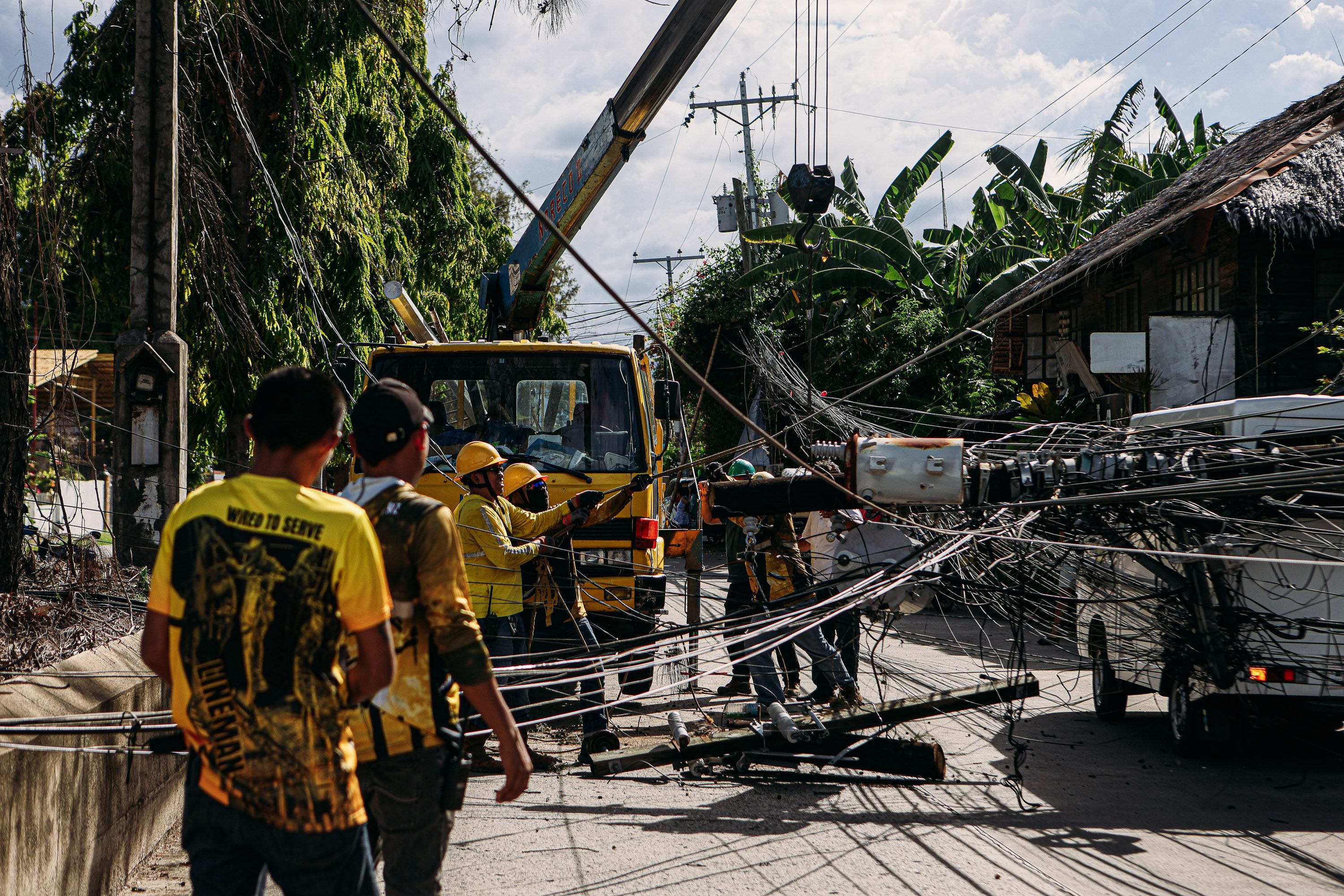
Outage work has several separate stages: anticipating where trouble may occur, detecting that something has failed, locating the likely fault, and coordinating safe repairs. AI can support each stage, but they are not interchangeable. A weather model that predicts an area may see storm damage is not the same thing as a sensor confirming which line is down.
Utilities can combine weather forecasts, past faults, network maps and equipment condition to estimate where crews and materials may be needed. UK Power Networks’ Storm Resilience project, for instance, combined historical fault records and weather data to estimate storm-related faults. Its lightning-tracking trial captured 37 suspected lightning faults, but the project account said that was not enough evidence for a permanent business change; it set a 200-fault recognition target for fuller verification. That is the less glamorous but more useful lesson: a promising pilot still needs enough testing before operators should rely on it.
For detection and localization, models can help sift through streams of alarms and measurements to identify patterns that deserve an operator’s attention. The utility then needs to confirm the fault against its network model and operating procedures. In March 2025, PG&E said it was using AI or advanced machine learning at 1,400 of its 1,600 weather stations to inform enhanced outage predictions and pre-position crews and equipment ahead of storms. This is an example of AI supporting preparedness, not automatically repairing a damaged line.
The weak link is often the data, not the model
Grid data comes from equipment installed across decades, from different vendors and under different operating conditions. Missing readings, incorrect timestamps, stale network maps or a sensor that has drifted can give a sophisticated model a false picture. A model trained mostly on ordinary days may also be least reliable during the unusual storm or equipment failure when operators most need help.
There is a security dimension, too. More connected devices and data pipelines create more places that need protection, while automated recommendations must not be allowed to bypass operational safeguards. The Department of Energy’s recommendations include validating models and keeping humans involved in high-consequence decisions. I would treat that not as a brake on useful AI, but as part of what makes an operational tool trustworthy.
The same caution applies to language. A polished outage update or confident vendor claim is not evidence that a prediction is right. A general-purpose AI detector free tool may estimate whether text appears machine-generated, but it cannot verify an outage location, a load forecast or the truth of an operational statement. Those need to be checked against reliable grid data and accountable human review.
What a sensible rollout looks like
The strongest near-term case is for AI that helps people see a problem earlier, understand uncertainty and coordinate a response, while existing protection systems and trained operators retain clear authority. Utilities should test tools on local data, include severe and unusual conditions in validation, monitor performance after deployment, and make it possible to fall back to established procedures when inputs are suspect.
AI will reshape grid operations less like a single brain taking control and more like a set of sharper instruments in the control room. The measure of success is not how much automation a utility can advertise. It is whether forecasts, alarms and restoration plans lead to safer decisions and fewer or shorter interruptions, without hiding uncertainty behind a confident-looking prediction.
Research note: This article draws on Department of Energy materials from 2024, a PJM forecasting presentation delivered to FERC in July 2024, UK Power Networks’ project account and PG&E’s March 2025 storm-preparation announcement. Utility-reported results and pilot outcomes are identified as such; performance can vary by network and operating conditions.